ABOUT
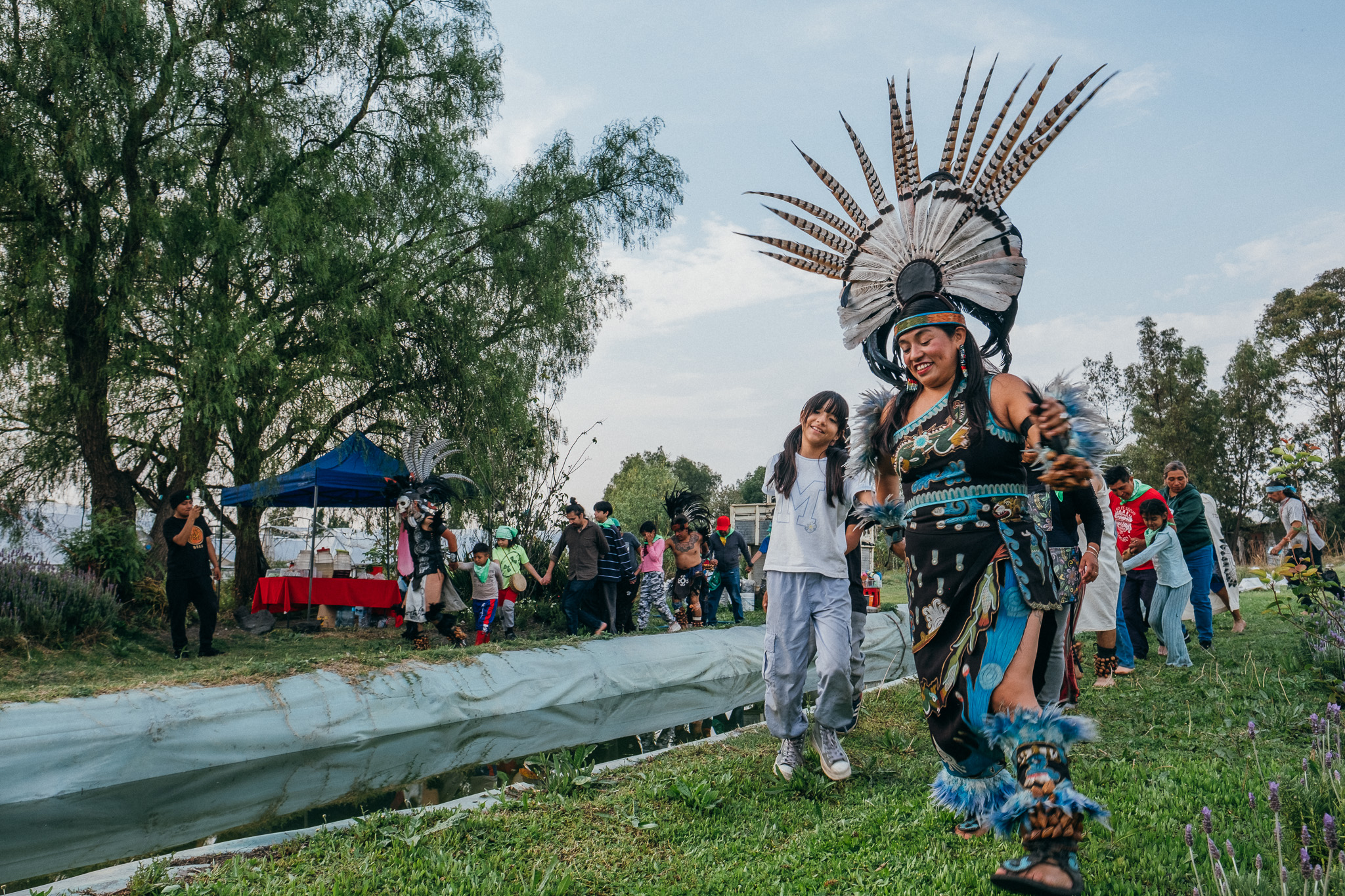
The Tlamachtiloyan Children Festival of Resistance in the pueblo originario of San Gregorio Atlapulco, in the Xochimilco borough of Mexico City, is a multifaceted initiative designed to address this community's pressing issues of pollution, community fragmentation, water extraction, and urbanization. The festival aims to activate collective memories to reconnect members of the community, especially the younger generation, with their land and water—as well as mend relationships between each other—through a series of participatory activities and community engagement with a variety of social and etarian groups, as well as communitarian evidence production to promote justice and repair.
After a preliminary phase of participatory definition of the scope of the festival, it was structured in three phases. The first phase will involve defining the festival's scope and lines of inquiry with the traditional authorities of Atlapulco, and engaging with various stakeholders to establish potential collaborations. The second phase focused on training community members as evidence producers, collecting and analyzing evidence, and holding various festival activities throughout a ten-month-long timeframe. Among these activities were communal farming to highlight the ecosystem's fragility and the gathering of seeds and weeds as evidence of lost crops. It also featured learning and participation in a series of ancestral pottery and musical traditions coming from other indigenous groups to raise awareness about the frailty of their cultures and the environmental issues they are facing, but also highlight what they have in common, alongside community work to clean the ejidos, which are ancestral communal lands, and discuss futures of resistance. Other activities include documenting water memories through elders' stories and water sample recollection, and the creation of narratives in a variety of media to communicate the community's findings effectively. The final phase will involve deep analysis of the collected evidence, the production of an audiovisual piece and research tables which narrate the community's struggles and resistances, and the establishment of the Tlamachtiloyan Community Investigation Center to safeguard the collective knowledge produced.
In essence, the festival is envisioned as a resistance school for children developed through a collective investigation into the political, economic, and social processes that have transformed Atlapulco from a water-based farming community to a fragmented, extracted, polluted, and urbanized pueblo originario. By inquiring, together with the young ones, into the role of evidence and challenging traditional notions of its production and acceptance, the festival seeks to open new fora for justice that emerge from the traditions of the pueblos. Through gatherings and collective work, the festival aims to reconnect the community with their heritage by producing art and evidence that narrates their history of resistance to ultimately foster a future of justice and repair. The final outputs will reside in the Casa del Pueblo Tlamachtiloyan, a community center and public library, preserving the collective memory and continuing the struggle for justice.
— Elis Mendoza and Sergio Beltrán-García
After a preliminary phase of participatory definition of the scope of the festival, it was structured in three phases. The first phase will involve defining the festival's scope and lines of inquiry with the traditional authorities of Atlapulco, and engaging with various stakeholders to establish potential collaborations. The second phase focused on training community members as evidence producers, collecting and analyzing evidence, and holding various festival activities throughout a ten-month-long timeframe. Among these activities were communal farming to highlight the ecosystem's fragility and the gathering of seeds and weeds as evidence of lost crops. It also featured learning and participation in a series of ancestral pottery and musical traditions coming from other indigenous groups to raise awareness about the frailty of their cultures and the environmental issues they are facing, but also highlight what they have in common, alongside community work to clean the ejidos, which are ancestral communal lands, and discuss futures of resistance. Other activities include documenting water memories through elders' stories and water sample recollection, and the creation of narratives in a variety of media to communicate the community's findings effectively. The final phase will involve deep analysis of the collected evidence, the production of an audiovisual piece and research tables which narrate the community's struggles and resistances, and the establishment of the Tlamachtiloyan Community Investigation Center to safeguard the collective knowledge produced.
In essence, the festival is envisioned as a resistance school for children developed through a collective investigation into the political, economic, and social processes that have transformed Atlapulco from a water-based farming community to a fragmented, extracted, polluted, and urbanized pueblo originario. By inquiring, together with the young ones, into the role of evidence and challenging traditional notions of its production and acceptance, the festival seeks to open new fora for justice that emerge from the traditions of the pueblos. Through gatherings and collective work, the festival aims to reconnect the community with their heritage by producing art and evidence that narrates their history of resistance to ultimately foster a future of justice and repair. The final outputs will reside in the Casa del Pueblo Tlamachtiloyan, a community center and public library, preserving the collective memory and continuing the struggle for justice.
— Elis Mendoza and Sergio Beltrán-García
Projects
-
 Session 01. Our Little School of ResistanceTlamachtiloyan as a Living Organism
Session 01. Our Little School of Resistance
Artist: Sergio Beltrán-García
Date: October 25th, 2025
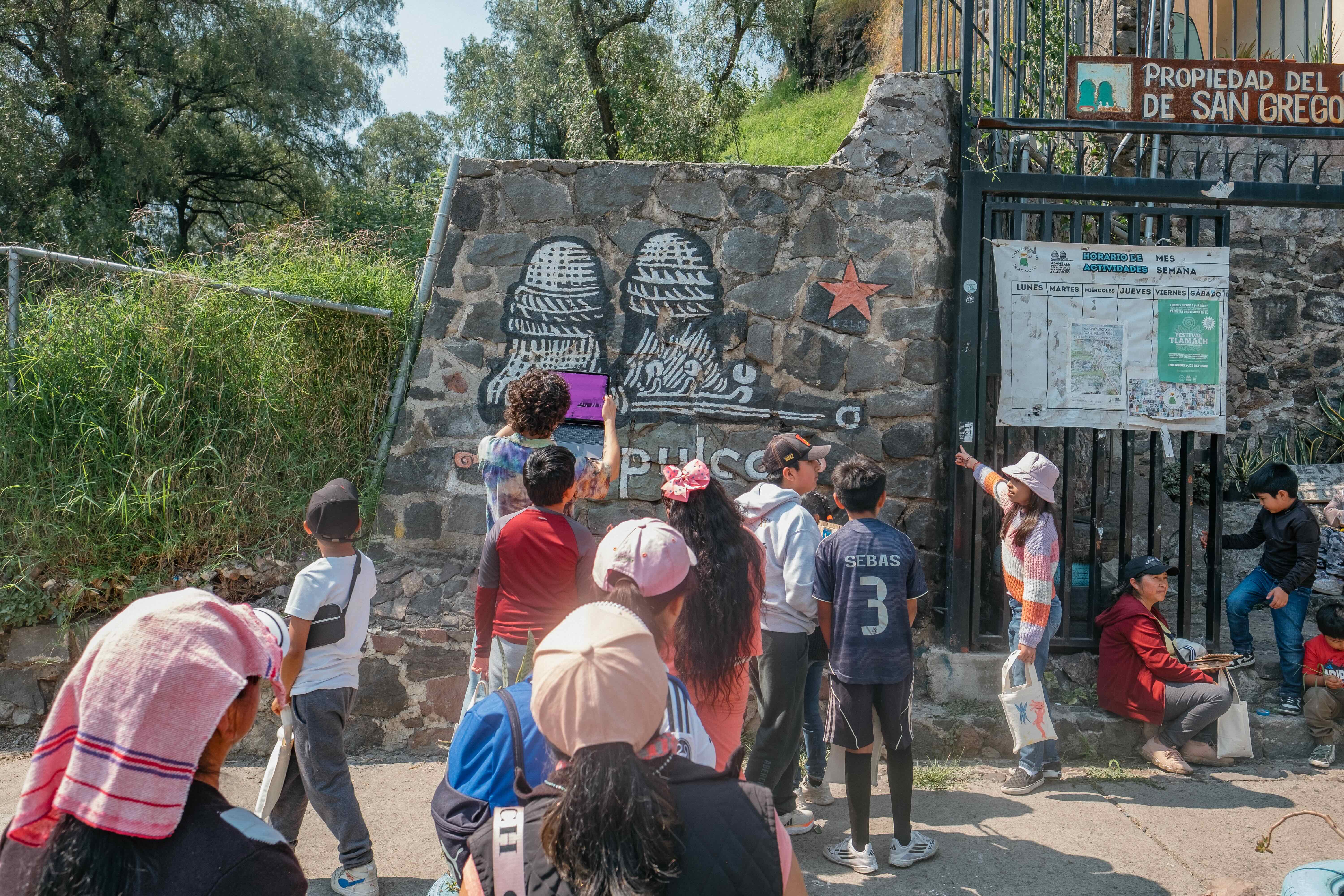
This session invites the festival's child participants to act as investigators tasked with finding “evidence of life” in the Tlamachtiloyan and its surrounding landscape. Moving as a group of young detectives through five stations—the Moyotepec terrace, the south-western boundary path, the old sports ground and rodeo grounds, the entrance to the Casa del Pueblo, and the Tlamachtiloyan itself—participants sketch what their senses register, collect objects for a communal archive box, and select items for LiDAR scanning. At each stop the session layers a different register of evidence: bodily sensation and the surrounding microwatershed at Moyotepec; plant and animal life and visible changes to the hills at the boundary path; oral testimony from a community elder recalling the site's rodeos, festivities, and everyday life; and a historical account of the pueblo's land disputes running from the pre-Hispanic and colonial periods through the twentieth-century agrarian conflicts and the more recent struggles (2022–present) to defend the Casa del Pueblo and its water. The session closes by reframing the Tlamachtiloyan itself as a living body that must be fed, rested, and healed, inviting children to draw the house as a person and to reflect, through notes and simple first-aid materials, on the forms of care it gives and needs.
About the artist
Sergio Beltrán-García is a Mexico City-based architect, activist, and researcher whose work engages the aesthetic and political practices of transitional justice through memory-based methodologies. He has contributed to the design of numerous memorials addressing episodes of state and non-state violence in Mexico, including sites commemorating the 2008 police raid on the New's Divine nightclub, the forced disappearance of peasants during the 1970s counterinsurgency, and the 2017 earthquake building collapses. He is an adjunct professor at UNAM's Facultad de Arquitectura, where he co-directs re/presentare as part of the Investigative Commons -
 Session 02. Acknowledging the PlastisphereNavigate, Find, Get Muddy, and Sow
Session 02. Acknowledging the Plastisphere
Artist: Miguel Cinta Robles
Date: November 29th, 2025
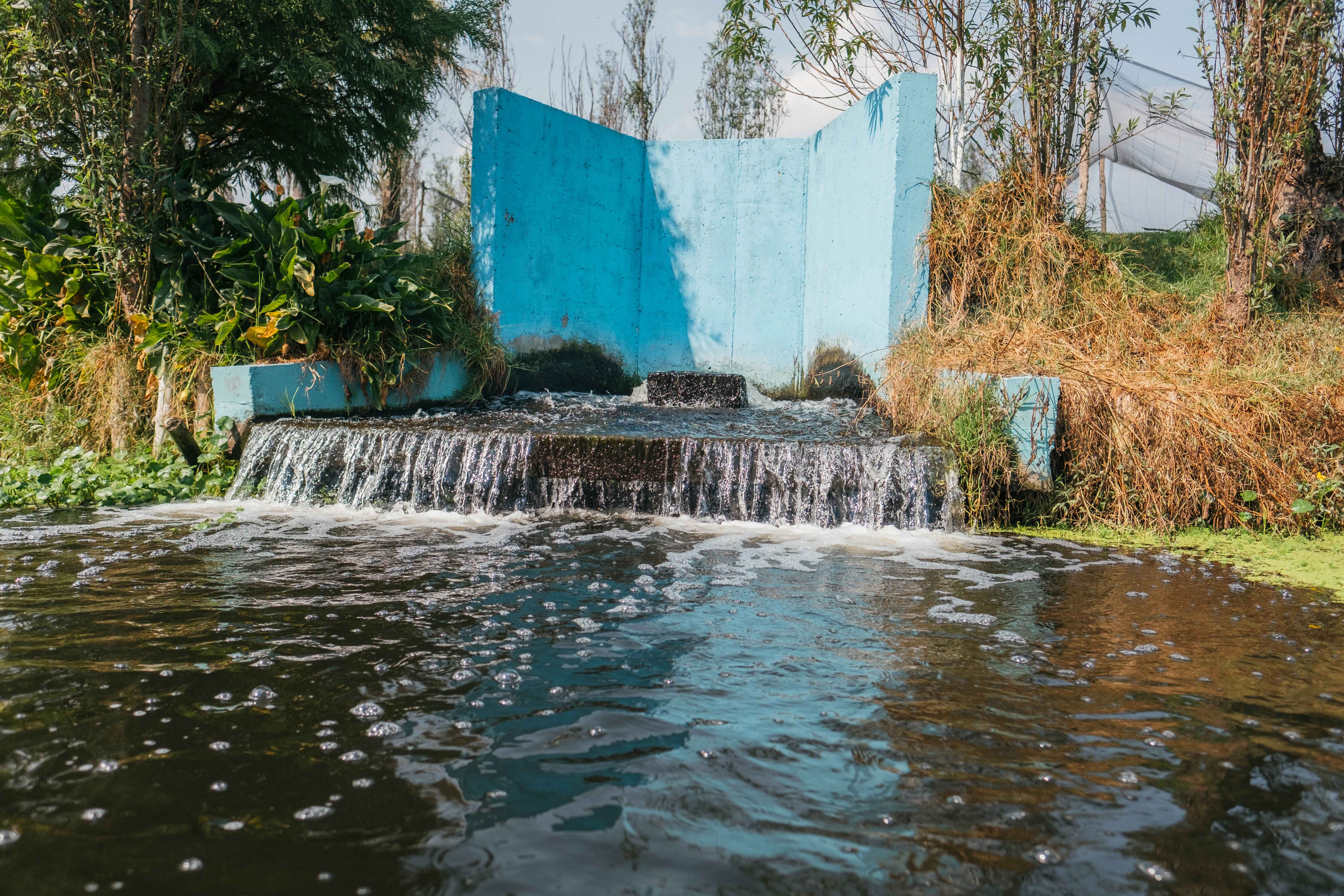
Held over a full day at the Chinampa en Resistencia in San Gregorio Atlapulco, this workshop aimed to lead the children to question what types of assemblages form the contemporary chinampa. What has changed since their grandparents’ time, and what can they hope for in the future?
The session was organized around three thematic axes: water, memory, and the disappearance of the canals under the growing city; vegetation, plastics, and the origin of everyday objects found in the territory; and earth and the subterranean life of the chinampa system. The day opened with a procession in which participants move as a collective body beneath a long sky-blue cloth that stands in for a river, recalling the canals that once linked San Gregorio to Xochimilco and the wider canoe-borne produce trade, while stories about the water's disappearance are narrated along the route. It pays attention to the continuity of life and the complexity of the more-than-human continuum that forms their territory. Opening up space to delve into matters of care, our relationship to soil and the rhythms and cycles in which the chinampero life unfolds.
On arrival, children form small brigades to gather plant matter and found objects from the chinampa and its surroundings, which are sorted by color and texture and used to produce cyanotype botanical prints—each child keeps a set of prints while a larger collective piece is donated to the Casa del Pueblo de Tlamachtiloyan as a visual register of the territory. As a final exercise, the group worked in the chinampa to learn the farming processes unique to this geography, which have been guarded through centuries of community practice.
About the artist
Miguel Cinta Robles (b. Oaxaca, 1997) lives and works between Oaxaca and Mexico City. His practice intertwines stories and methodologies across agriculture, sculpture, and pedagogies connected to the land. Through installation, drawing, science fiction speculation, and machine building, he reflects on the technification of rural spaces and their relation to extractivist practices that sustain data centers and the material dimension of the cloud. He is the founder of Domingo de Cerro, a project of workshops and hikes through the mountains of Oaxaca that, through collective walking, seeks to understand the political contexts of different territories. He collaborates with Terreno Familiar, a project focused on agroecology and bioconstruction that works toward food sovereignty through community-based practices in Tlalixtac de Cabrera. His work has been presented at Proyectos N.A.S.A.L. (Mexico City, 2024), A4 Arts Foundation (Cape Town, South Africa, 2023), and the Museo de Arte Carrillo Gil (Mexico City, 2022). In 2023, he was a grantee of PECDA Oaxaca, and in 2025, he took part in the residency El Cantar del Caos Mundo (Travesías Terremoto) in the Dominican Republic. -
 Session 03. A Garden on the RubbleDream Detoxification Workshop, Listening with the Soles of the Feet
Session 03. A Garden on the Rubble
Artist: Federico Pérez Villoro
Date: February 7th, 2026
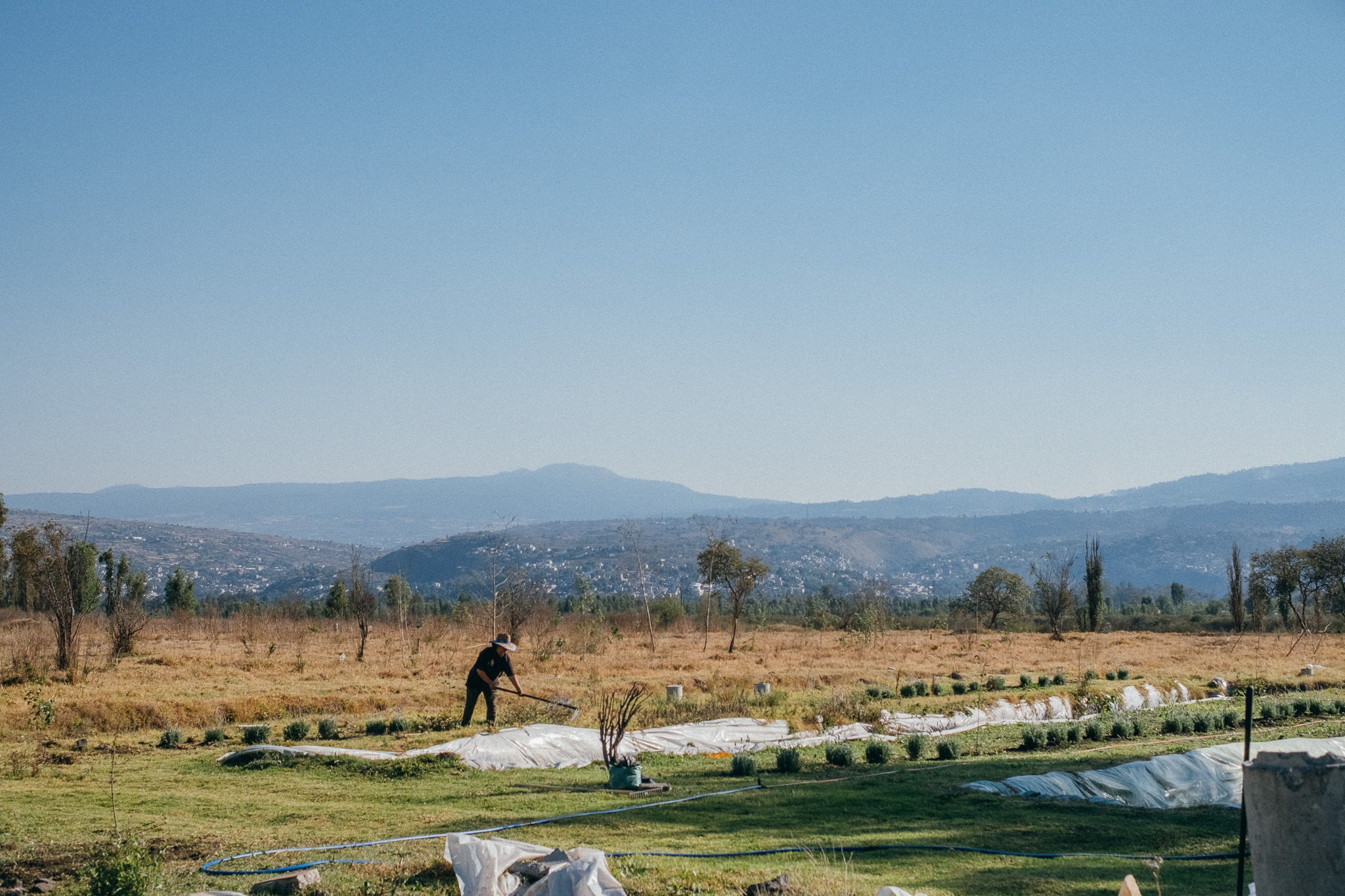
This session was held at an ejido, a form of communal land that was created after the Mexican Revolution, stimulating children's political imagination by tracing how toxic agents settle into dreams and nightmares, treating deep listening and intuition as legitimate tools for producing evidence. After an opening round in which participants introduced themselves through a sound tied to their relationship with the land, the group built simple rattles and heard from a family of long-standing ejido residents about the layered history of the site and the community's ongoing struggle around a construction-debris landfill (cascajo) that displaced part of the ejido. Children then took part in a collective planting of lavender — framed both as a pollinator attractor and as a form of resistance and land care — before moving through a sequence of embodied listening exercises: lying with an ear to the ground while others mimic animal sounds, blindfolded listening to instruments played at a distance, use of stethoscopes and Pinard horns to listen to bodies, rocks, and water, and a simple contact-microphone device (rama oído) that amplifies the sounds of different textures encountered while walking. Small teams then recorded short soundscapes as they collected fragments — seeds, stones, shells, debris, plastics, metals — that became the material for hand-built maracas, each logged with questions about origin, material, and age. The session closed with a shared reflection on what lies beneath the ground and a preview of the underground sound instrument to be built in the following session.
About the artist
Federico Pérez Villoro (b. 1987, Guadalajara) is an artist and researcher based in Mexico City. Through installation, text, video, and performance, his work examines how power operates through information and computational technologies; his more recent research addresses the industrialization and domestication of rivers and other bodies of water, including the shifting, militarized border formed by the Rio Grande/Bravo. His work has been exhibited internationally at venues including Museo Universitario Arte Contemporáneo (MUAC), Transmediale, the Taipei Fine Arts Museum, the Museo de Arte Contemporáneo de Monterrey, and Casa del Lago UNAM, among others, and has been published by outlets such as Printed Matter, C Magazine, and the Walker Art Center's The Gradient. In 2019 he founded Materia Abierta, a Mexico City summer school on theory, art, and technology developed with institutions such as MUAC and Museo Tamayo. -
 Session 04. Our Sovereign Nourishment, Our ProtectorsFuturist Archaeology
Session 04. Our Sovereign Nourishment, Our Protectors
Artist: Miguel Cinta Robles
Date: March 7th, 2026
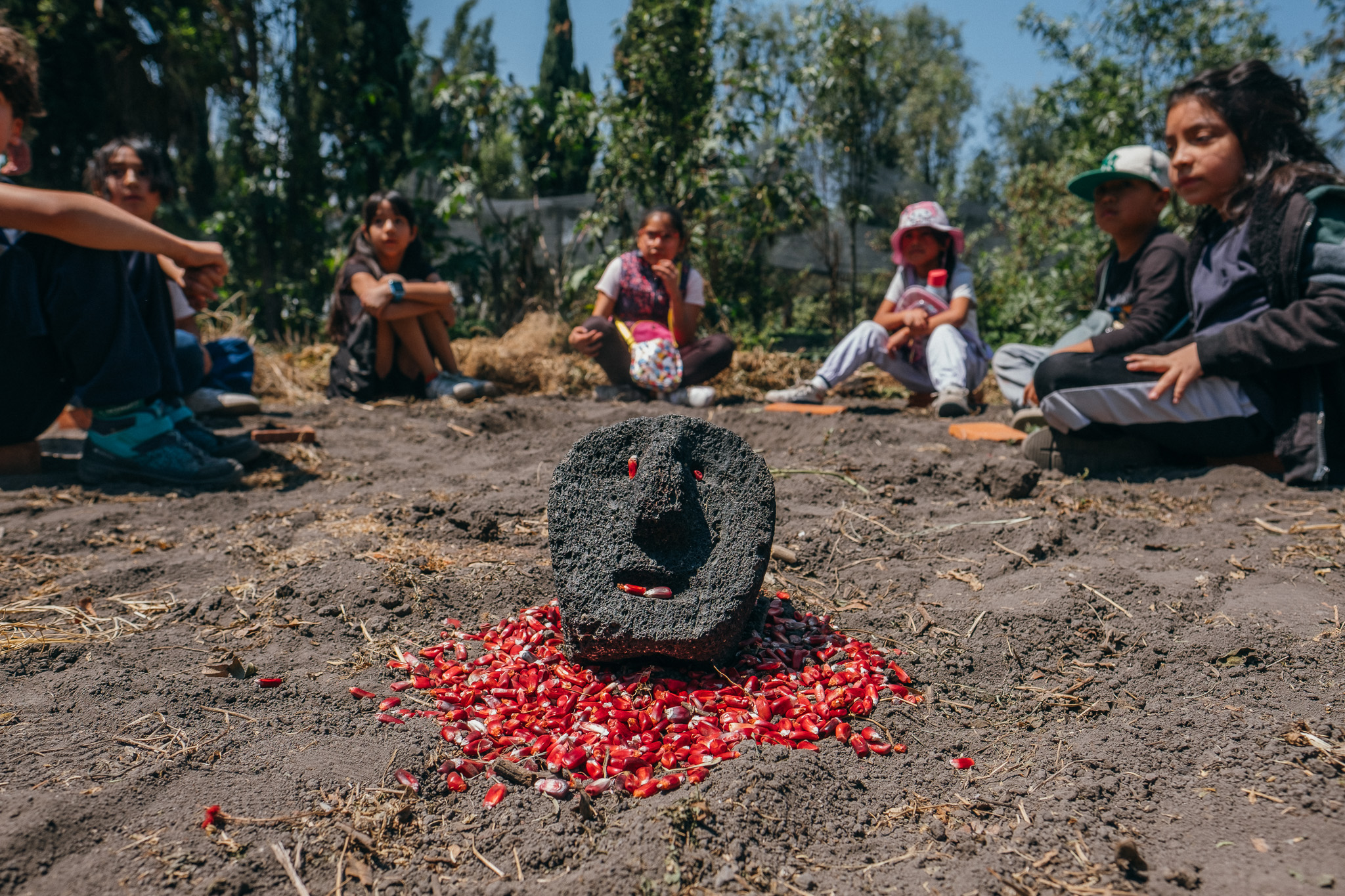
This session takes the buried and the discarded as starting points for speculating about memory and the future. Framed by two reference points—the pilgrimage tradition of the pedimento (a request to the gods) near the shrine of the Virgen de Juquila in Oaxaca, where clay figures are shaped as requests or offerings, and the sherds and clay fragments that farmers routinely turn up while working milpa land—the workshop asks what it would mean to build fictions and pasts out of the earth underfoot. The session unfolds in four movements: an opening conversation about ruins, artifacts, and what lies beneath the ground; a sensory encounter with the earth through the pisado del adobe technique, treading and mixing clay with water underfoot, at times with eyes closed or to music; a period of collective modeling in which the prepared clay is shaped into objects standing for tools, rituals, decoration, or imagined futures, guided by open-ended questions about memory and utility; and, finally, a communal firing of the modeled pieces in a brick oven built together with the children, which doubles as a hearth for preparing food. The fired figures are then returned to the chinampa—buried, planted, floated in the water, or set among the crops—as offerings or guardians of the site. Opening up the idea of guardians allowed the participants to delve into the question of land defense, the obligations to the community, and the criminalization that many of their families have suffered as a consequence.
About the artist
Miguel Cinta Robles (b. Oaxaca, 1997) lives and works between Oaxaca and Mexico City. His practice intertwines stories and methodologies across agriculture, sculpture, and pedagogies connected to the land. Through installation, drawing, science fiction speculation, and machine building, he reflects on the technification of rural spaces and their relation to extractivist practices that sustain data centers and the material dimension of the cloud. He is the founder of Domingo de Cerro, a project of workshops and hikes through the mountains of Oaxaca that, through collective walking, seeks to understand the political contexts of different territories. He collaborates with Terreno Familiar, a project focused on agroecology and bioconstruction that works toward food sovereignty through community-based practices in Tlalixtac de Cabrera. His work has been presented at Proyectos N.A.S.A.L. (Mexico City, 2024), A4 Arts Foundation (Cape Town, South Africa, 2023), and the Museo de Arte Carrillo Gil (Mexico City, 2022). In 2023, he was a grantee of PECDA Oaxaca, and in 2025, he took part in the residency El Cantar del Caos Mundo (Travesías Terremoto) in the Dominican Republic. -
 Session 05. Commoning the ArchiveBody, Environment, Alchemy
Session 05. Commoning the Archive
Artists: Emiliano Farfán and Elis Mendoza
Date: June 6th, 2026
Conceived as a closing session, this proposal presented the evidence gathered by the festival's child investigators back to the community of San Gregorio Atlapulco. The closing session was set to build an exhibition as the basis of a common archive of local epistemologies, strategies of resistance, and shared dreams for the future. It was planned in a first session with the participating children,
The exhibition was organized around three modules: The first, Body (“embodied evidence”), gathers material from unplanned drifts through the Moyotepec hill and planned encounters such as interviews at the Tlamachtiloyan and a canoe journey through the chinampa—documented through photography, video, and testimony—and treats the body as the first surface through which the territory is sensed. The second, Environment (“found evidence”), organizes material by site—chinampa, ejido, and Tlamachtiloyan—pairing evidence of the present (cyanotypes of the still-flowing canals), evidence of the past (photographs contrasting today's construction debris with earlier images of cultivated land, and a clay bust of a community elder made in an earlier session), and evidence oriented toward the future (interviews about the springs and traditions of the Moyotepec, and children's notebooks documenting their own learning). The third module, Alchemy, or transformation (“constructed evidence”), presents two outcomes of the earlier sessions as evidence of what is still possible: the fired clay figures that now stand as guardians of the chinampa and its canals, and instruments assembled from plastic and construction debris that repurpose materials which had harmed the ejido. The session closes by asking what the water itself has to say, proposing to layer hydrophone recordings with children's voices passed through a paper-cup “telephone,” treating non-human testimony as a further register of evidence.
About the artists
Emiliano Farfán is an architect, researcher, and artist based in Mexico City, working with new spatial and curatorial approaches to Gender and Queer Identities through graphic arts, film, performance, and music; advocating for human rights. He is a researcher conducting forensic architecture investigations at re/presentare, a founding member and co-director of arqueer.mx –a transdisciplinary investigative community on Queer Spatial Theories and Oral History.
Elis Mendoza is an architect, researcher, and curator, and co-founder and co-director of re/presentare. A PhD candidate in Architecture History and Theory, her work examines the intersections of built space, global institutions, and human rights, with particular attention to post-conflict communities; she has researched human rights violations in Mexico and Guatemala and presented findings before the Guatemalan Supreme Court in the 2016 Sepur Zarco case. Her earlier architectural practice spanned Spain, India, and Mexico, and she has worked on curatorial and exhibition-design projects with institutions including the Círculo de Bellas Artes de Madrid, Columbia University's GSAPP, Princeton University, MUAC, and the Istanbul Design Biennial.
-

-
Center for Human Rights and the Arts
Barringer House, Bard College
30 Campus Road
Annandale-On-Hudson, NY 12504 -